
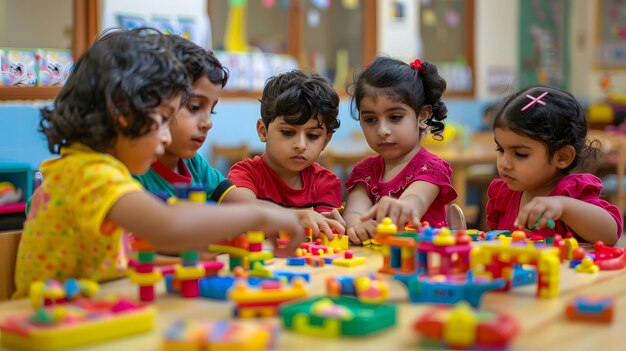
Children learn most deeply when their curiosity is treated as something valuable, not something to be managed. In a space designed for independence, the day does not begin with a rush to “cover” topics; it begins with an invitation to explore. When adults slow down enough to observe, they notice how children naturally gravitate toward order, repetition, and discovery. The most surprising part is that this kind of learning can look quiet from the outside, yet feel thrilling on the inside.
Where Choice Becomes a Teacher
When children can choose purposeful work, they practice decision-making in small, manageable steps. They learn how to start, persist, pause, and return skills that later support everything from reading comprehension to teamwork. For parents comparing approaches, visiting a classroom that feels like the best Montessori school in Bangalore can be less about labels and more about seeing children confidently select tasks, stay with them, and put them back with care. Choice also makes learning personal, because each selection reflects a need: to refine movement, to master a concept, or to understand how the world fits together.
The Calm Power of Repetition
Children repeat activities not because they are stuck, but because they are building something inside themselves. A task that looks simple, pouring water, fitting shapes, tracing letters, becomes a laboratory for concentration and self-correction. Repetition in a prepared environment is not rote; it is refinement. Over time, children learn to notice tiny errors, adjust their actions, and feel proud of progress that belongs to them rather than to adult praise.
Paths Children Choose and Master
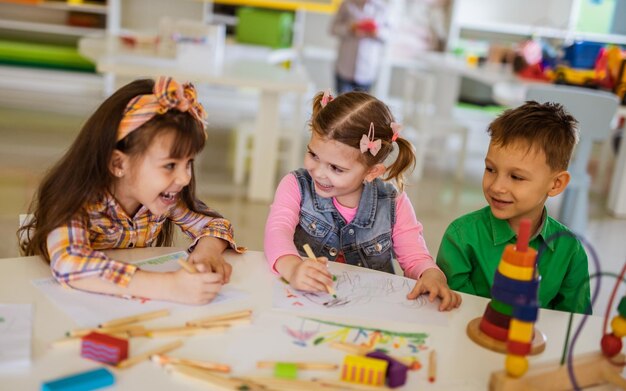
When learning is self-led, children don’t just “use” activities; they return to them with purpose, noticing new details each time. One day a child may focus on careful hand movements; another day, the same work becomes a quiet test of patience, memory, and sequencing. Because the child sets the pace, mastery feels like a personal journey rather than an assignment. This repeated choice builds confidence, and it also helps children discover what they enjoy, what challenges them, and what they want to pursue next.
The Adult as Observer and Gardener
In child-led learning, the adult’s role is active, but not controlling. The adult watches for readiness, offers precise demonstrations, and then steps back to allow real practice. This requires humility: trusting that children can struggle productively without being rescued too soon. It also requires skill: knowing when to intervene, when to wait, and when to adjust the environment rather than the child. The payoff is a classroom rhythm where support feels steady, and independence grows naturally.
Mistakes That Become Messages
Errors are not treated as failures; they are information. When a child encounters difficulty, the question becomes: what is this moment teaching? Sometimes it reveals a missing step, sometimes a need for stronger hands, sometimes simply fatigue. Because the environment encourages self-checking, children learn that mistakes are temporary and solvable. This builds resilience without speeches, and it shapes a mindset where improvement is expected rather than feared.
Friendships Built Through Real Work
Social development thrives when children share a space where everyone is engaged in meaningful activity. Younger children watch older ones with admiration, and older children practice leadership without being told to “help.” Conflicts still happen, but the culture supports calm language, turn-taking, and repair. When children experience community as a practical everyday reality, waiting for a meal, negotiating space, respecting quiet, they learn empathy in a way that lectures cannot deliver.
Imagination With Structure
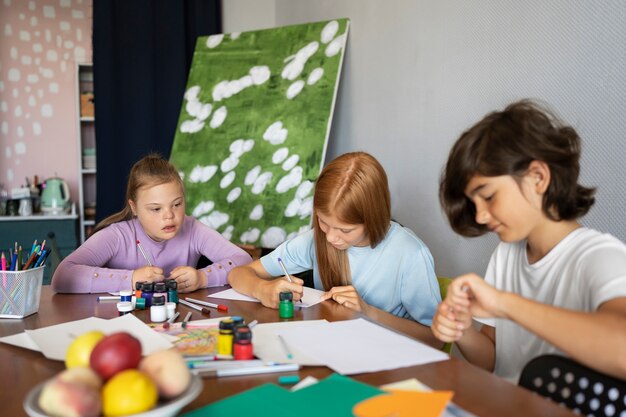
Creativity is not only about wild ideas; it is also about the ability to shape ideas into something coherent. A child who can concentrate, sequence steps, and complete a chosen task is building the foundation for original thinking later. Parents often ask for creative thinking tips, but the most powerful “tip” is to protect long stretches of uninterrupted work and reduce constant adult direction. In that space, imagination becomes more than playacting; it becomes the confidence to test possibilities, revise outcomes, and try again.
Skills That Travel Beyond Childhood
The goal is not early academics for their own sake, but capability for life. Children who learn to manage their time, care for shared spaces, and persist through challenges carry those habits into any curriculum. They begin to connect effort with results, and they internalize responsibility as something they own. This is why many families see child-led environments as education for success, not because they promise shortcuts, but because they strengthen the underlying skills that make future learning smoother and more joyful.
Closing Reflections
When children lead their learning, they reveal a remarkable truth: guidance does not have to mean control. With thoughtful spaces, patient adults, and meaningful work, children learn how to think, choose, concentrate, and collaborate in ways that feel authentic to them. Over time, the classroom becomes more than a place to receive information; it becomes a place to become capable. And that quiet transformation day after day is the real adventure.